어른, 아이 가릴 것 없이 환절기만 되면 콧물, 재체기, 코막힘으로 고생하게 만드는게 알러지성 비염이다.
알러지성 비염이 있는 본인이 괴로운 것 뿐 아니라, 주변인들에게도 피해를 주기 마련.
그래서 사람을 상대해야 하는 직업인 경우 알러지성 비염을 치료하고픈 마음는 더욱 절실해진다.
그러나 알러지성 비염은 쉽게 낫질 않는다.
좋다는 민간요법을 다 써봐도, 알러지 약을 사서 먹어도 효과가 있는 듯 하다가 다시금 재발한다.
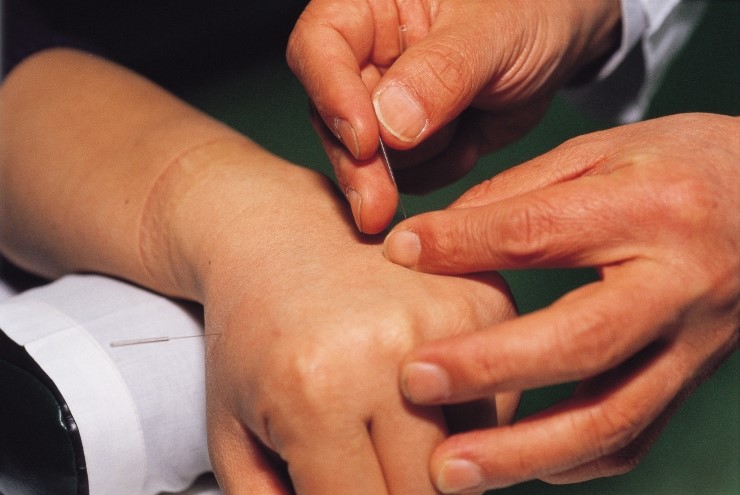
이런 알러지성 비염에 침치료가 효과적이라는 연구결과가 있어 눈길을 끈다.
알레르기 비염 치료에 침치료가 효과적이라는 임상연구결과가 알레르기 관련 권위있는 국제 학술지인 "ALLERGY(알러지)"지에 실렸다.
이번 연구는 국내연구진들에 의해 진행된 다기관 무작위대조연구이다.
238명의 환자를 대상으로 한 본 연구에서 1주일에 3회씩 총 4주간 치료를 받은 후 그 경과를 관찰한 결과, 가짜 침(sham acupuncture) 치료와 대기자군에 비해 진짜 침 치료가 알러지비염환자의 증상척도(TNSS, TNNSS)를 유의하게 개선시키는것이 확인되었다.
이미 기존의 연구들(http://blog.naver.com/lunarmix?Redirect=Log&logNo=60132433530)을 통해서도 침 치료가 알러지 비염에 효과적인것이라는것이 밝혀진 만큼, 알러지 비염을 한의원에서 치료받으시는것은 과학적으로도 합리적인 선택이 될 것이다.
Allergy. 2012 Dec 18. doi: 10.1111/all.12053. [Epub ahead of print]
A multicenter, randomized, controlled trial testing the effects of acupuncture on allergic rhinitis.
Source
Department of Medical Research, Korea Institute of Oriental Medicine, Daejeon, South Korea.
Abstract
BACKGROUND:
The aim of this study was to evaluate the efficacy and safety of acupuncture in the treatment for allergic rhinitis.
METHODS:
This study was a multicenter, randomized, parallel-controlled study. Participants were randomized to either the active acupuncture, shamacupuncture, or waitlist groups. The active and sham acupuncture groups received acupuncture treatment three times per week for 4 weeks. In the sham group, minimal acupuncture at nonacupuncture points was used. The waitlist group did not receive any acupuncture treatment.
RESULTS:
Of the 238 participants, 97, 94, and 47 individuals were assigned to the active acupuncture, sham acupuncture, and waitlist group, respectively. After the treatment, the difference in the total nasal symptom score (TNSS) was significantly reduced in the active acupuncture group compared with the sham acupuncture (difference: -1.03, 95% confidence interval [CI]: -1.96, -0.09, P = 0.03) and waitlist (difference: -2.49, 95% CI: -3.68, -1.29, P < 0.0001). The active acupuncture group exhibited a significant change in the total non-nasal symptom score (TNNSS) compared with the waitlist (difference: -0.78, 95% CI: -1.22, -0.34, P = 0.0002), but not the sham acupuncture group (difference; 0.15, 95% CI: -0.21, 0.5, P = 0.56). Both active and sham acupuncture treatments resulted in significant improvements in TNSS and TNNSS compared to baseline.
CONCLUSION:
Active acupuncture showed a significantly greater effect on symptoms of allergic rhinitis than either sham acupuncture or no active treatment. The symptoms of allergic rhinitis decreased significantly after treatment in the both acupuncture and sham acupuncture groups. Acupuncture appears to be an effective and safe treatment for allergic rhinitis.
ⓒ 2012 John Wiley & Sons A/S. Published by Blackwell Publishing Ltd.
관련 진료 안내
소아 성장
나효석 원장